


In the aluminum industry, one of the most commonly specified alloys for roofing, cladding, and architectural applications is AA3105 aluminum alloy due to its excellent balance of strength, corrosion resistance, and formability.
Recently, we received a sample from an overseas customer labeled as AA3105 aluminum alloy. After conducting a thorough aluminum chemical composition analysis, we found that this sample did not meet the standard for AA3105 and was actually closer to a 1000 series alloy, such as AA1050, AA1100.
This case highlights the importance of verifying the true chemical composition of aluminum coil materials before procurement, especially for projects requiring high-quality colored aluminum coil.
The customer-supplied sample, marked as AA3105, which is provided by a competitor's supplier. To ensure reliability, we tested its aluminum chemical composition using advanced spectrometry methods.
Our in-house laboratory performed detailed elemental analysis, focusing on the key alloying elements such as magnesium (Mg), silicon (Si), and iron (Fe). The results showed:
- Magnesium (Mg) content was significantly below the 0.2–0.8% range required for AA3105.
- Instead, the chemical profile matched closely with 1000 series aluminum alloys (e.g., AA1050, AA1100), characterized by very high aluminum purity but minimal alloying elements.
This mismatch means that although the sample bore the AA3105 label, its performance would resemble a pure aluminum coil rather than the stronger, more corrosion-resistant 3105 alloy.


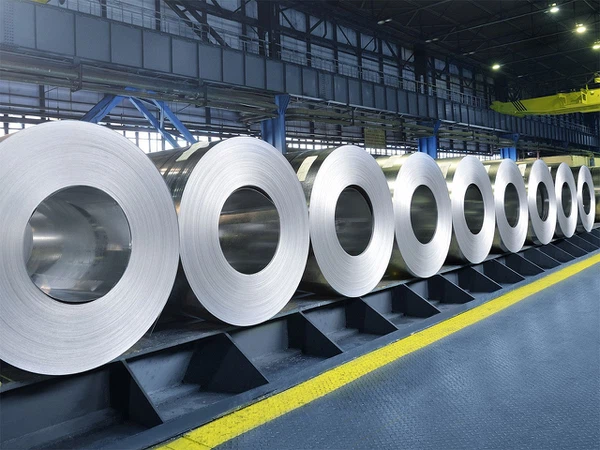
Why 3000 Series Aluminum Alloy Is Preferred for Colored Aluminum Coil
3000 series aluminum alloy is a popular choice for colored aluminum coil production due to its excellent balance of properties:
- Excellent corrosion resistance thanks to magnesium alloying, ideal for outdoor architectural applications.
- Higher mechanical strength compared to 1000 series alloys, ensuring durability.
- Good formability, enabling complex shapes and profiles needed in roofing and cladding.
- Widely used in roofing panels, siding, and decorative façades where long-lasting performance and aesthetic appeal are essential.
By contrast, the 1000 series alloys like AA1050, AA1100 offer high purity aluminum with great ductility but lack sufficient strength and corrosion resistance for such demanding applications.
For manufacturers and end-users, procuring colored aluminum coil or general aluminum coil, understanding the true alloy composition is essential to:
- Ensure the product meets performance expectations for strength and durability.
- Avoid premature corrosion or failure in harsh environments.
- Maintain coating adhesion and finish quality, which depend on the substrate alloy.
- Avoid project delays or additional costs caused by inferior materials.
To address this, our company conducts rigorous aluminum chemical composition testing on every batch of aluminum coil before the coating process. We provide detailed test reports to our customers, ensuring complete transparency and confidence in the quality of our colored aluminum coil products.
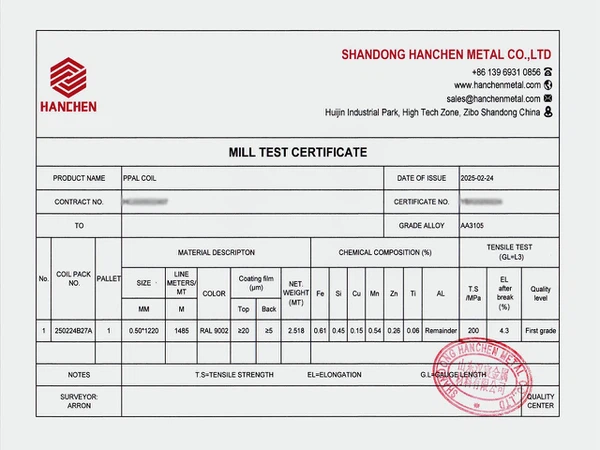

Choosing the right aluminum alloy is essential for project success, especially when ordering colored aluminum coil for architectural or industrial use. Mislabeling or misunderstanding the alloy grade can lead to significant issues, including:
- Poor coating performance.
- Structural failure due to insufficient strength.
- Higher maintenance and replacement costs.
We recommend always requesting detailed Aluminum Chemical Composition reports from your supplier and verifying test results independently if possible.
If you want reliable colored aluminum coil with verified aluminum chemical composition and detailed test reports, please contact us. We are committed to supporting your projects with premium materials and professional service.